You should talk to strangers! We can learn that from the Pirkei Avot, also called the Ethics of the Fathers, a Jewish book that is part of the Talmud and was written more than 2000 (two thousand) years ago.
I will bring below the original text in Hebrew and the translation to English.
אֵיזֶהוּ חָכָם? הַלּוֹמֵד מִכָּל אָדָם.
Who is wise? He who learns from every man.
יְהִי בֵּיתְךָ בֵּית וַעַד לַחֲכָמִים.
Your house should be a gathering place for the wise.
לֹא הַבַּיְשָׁן לָמֵד.
A shy person does not learn.
In my personal interpretation it is clear that we should talk to strangers, because obviously the people you never met are included in the category of “every man”.
Also we should never be shy, because a person who is shy is afraid to ask questions, and if you are afraid to ask questions you will never have answers!
We should also remember to ask for advice whenever we need:
מַרְבֶּה עֵצָה – מַרְבֶּה תְּבוּנָה.
The more counsel, the more understanding.
But the Pirkei Avot also reminds us that it is our duty to teach others:
He who learns in order to teach, it is granted to him to study and to teach; But he who learns in order to practice, it is granted to him to learn and to teach and to practice.
Forget about Artificial Intelligence, what we really need is Ancient Wisdom!
The world is full of matches: it’s easy to light them, but they go out very quickly. In the business world, matches are those people who get excited about an idea, make a lot of promises and create huge expectations.
But as soon as the first difficulties arise, the matches quickly go out. They abandon projects, don’t fulfill what they promised, don’t take responsibility.
If you want to be successful in business, you need to have partners who are determined, persistent and committed. You need people who don’t give up on their promises and who take responsibility.
In the case of startups, we need even more than that: we need to find people who are stubborn, hard-working, ready to sacrifice themselves, with a lot of resilience and willpower.
Execution is much more important than ideas, and only with the help of great partners is it possible to achieve great execution. Be careful with the matches, don’t waste time with them.
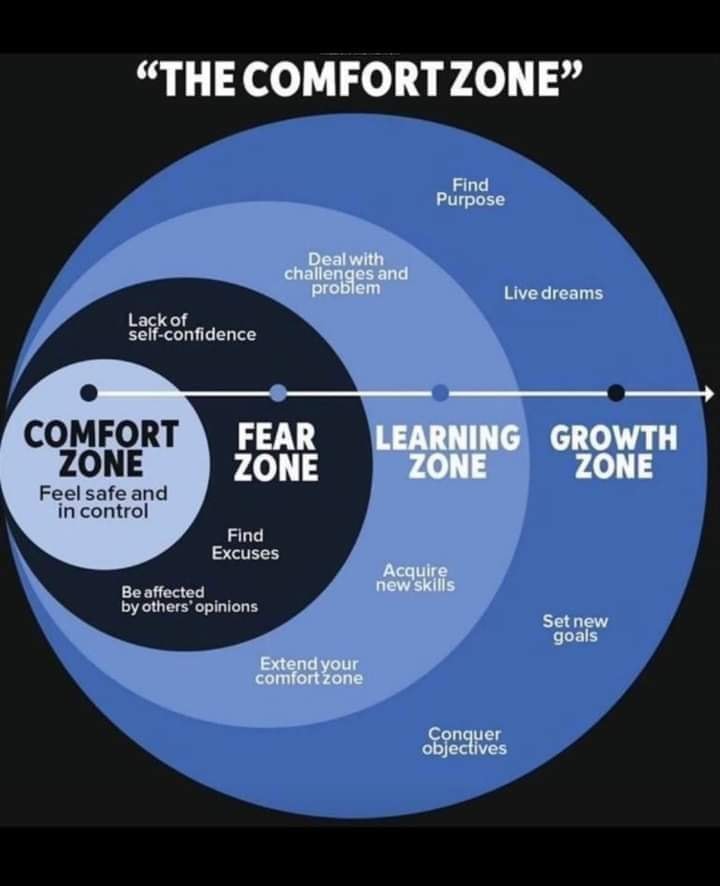
The Comfort Zone today is just an illusion. Perhaps in the past you could stay safe in your Comfort Zone for several years. But in the VUCA world we live today, your Comfort Zone will be destroyed faster that you have a plan. Some people today feel safe in places that will soon become a war zone.
If you are not familiar with VUCA, it means:
“V = Volatility: the nature and dynamics of change, and the nature and speed of change forces and change catalysts.”
“U = Uncertainty: the lack of predictability, the prospects for surprise, and the sense of awareness and understanding of issues and events.”
“C = Complexity: the multiplex of forces, the confounding of issues, no cause-and-effect chain and confusion that surrounds organization.”
“A = Ambiguity: the haziness of reality, the potential for misreads, and the mixed meanings of conditions; cause-and-effect confusion.”
We do not have much control over the events that are happening in the world. Thus, I recommend that you should feel less comfortable. A relevant book about this topic is “Only the Paranoid Survive” by Andy Grove, founder and former CEO of Intel. He writes in his book about the concept of Strategic Inflection Points. According to Grove:
“A strategic inflection point is when the balance of forces shifts from the old structure, from the old ways of doing business and the old ways of competing, to the new. Before the strategic inflection point, the industry simply was more like the old. After it, it is more like the new. It is a point where the curve has subtly but profoundly changed, never to change back again.”
“When an industry goes through a strategic inflection point, the practitioners of the old art may have trouble. On the other hand, the new landscape provides an opportunity for people, some of whom may not even be participants in the industry in question, to join and become part of the action.”
“When a strategic inflection point sweeps through the industry, the more successful a participant was in the old industry structure, the more threatened it is by change and the more reluctant it is to adapt to it. Second, whereas the cost to enter a given industry in the face of well-entrenched participants can be very high, when the structure breaks, the cost to enter may become trivially small.”
Another relevant book is “Who Moved My Cheese?” by dr. Spencer Johnson. The text describes the way one reacts to major change in one’s work and life. These are the main conclusions:
Change Happens They Keep Moving The Cheese
Anticipate Change Get Ready For The Cheese To Move
Monitor Change Smell The Cheese Often So You Know When It Is Getting Old
Adapt To Change Quickly The Quicker You Let Go Of Old Cheese, The Sooner You Can Enjoy New Cheese
Change Move With The Cheese
Enjoy Change! Savor The Adventure And Enjoy The Taste Of New Cheese!
Be Ready To Change Quickly And Enjoy It Again They Keep Moving The Cheese.
Now, a question:
“What motivates you: growth or comfort?”
I think that each individual is multi-dimensional: At any particular moment in life, in some aspects I want to grow and in other aspects I just want some comfort.
Thus, for example, at the same time that I want to make more money in my business I may want to spend less time with my friends and more time with my wife and children.
Please feel free to share in the comments below about your personal opinion or experiences.
  o  Real Programmers don't eat quiche.
     They like twinkies, coke and palate-scorching Szechwan food.

  o  Real Programmers don't write applications programs.
     They program right down on the bare metal.
     Applications programming is for the dullards who can't
     do systems programming.

  o  Real Programmers don't write specs.
     Users should be grateful for whatever they get:
     They are lucky to get any programs at all.

  o  Real Programmers don't comment their code.
     If it was hard to write, it should be hard to understand
     and harder to modify.

  o  Real Programmers don't document.
     Documentation is for simpletons who can't read listings or
     the object code from the dump.

  o  Real Programmers don't draw flowcharts.
     Flowcharts are the illiterate's form of documentation.
     Cavemen drew flowcharts; look at how much good it did for them.

  o  Real Programmers don't read manuals.
     Reliance on a reference manual is the hallmark of the novice
     and the coward.

  o  Real Programmers don't write in RPG.
     RPG is for gum-chewing dimwits who maintain ancient payroll programs.

  o  Real Programmers don't write in COBOL.
     COBOL is for COmmon Business-Oriented Laymen who can't run a
     business, much less write a real program.

  o  Real Programmers don't write in FORTRAN.
     FORTRAN is for wimp engineers who wear white socks.
     They get excited over finite state analysis
     and nuclear reactor simulation.

  o  Real Programmers don't write in PL/1.
     PL/1 is for insecure anal-retentives who can't
     choose between COBOL and FORTRAN.

  o  Real Programmers don't write in BASIC.
     Actually, no programmer writes in BASIC after reaching puberty.

  o  Real Programmers don't write in APL,
     unless the whole program can be written on one line.

  o  Real Programmers don't write in LISP.
     Only idiots' programs contain more parenthesis than actual code.

  o  Real Programmers don't write in PASCAL, BLISS, ADA, or any
     of those other sissy computer science languages. Strong typing
     is the crutch for people with weak minds.

  o  Real Programmers' programs never work right the first time.
     But if you throw them on the machine they can be patched into
     working order in only a few 30-hour debugging sessions.

  o  Real Programmers never work 9 to 5.
     If any Real Programmers are around at 9:00 am,
     its because they were up all night.

  o  Real Programmers don't play tennis, or any other sport which
     requires a change of clothes. Mountain Climbing is acceptable.
     Real Programmers wear climbing boots to work in case a mountain
     should suddenly spring up in the middle of the machine room.

  o  Real Programmers disdain structured programming.
     Structured programming is for compulsive neurotics who were
     permanently toilet trained. They wear neckties and carefully
     line up sharp pencils on an otherwise clear desk.

  o  Real Programmers don't like the team programming concept.
     Unless, of course they are the chief programmer.

  o  Real Programmers never write memos on paper.
     They send memos via computer mail networks.

  o  Real Programmers have no use for managers.
     Managers are a necessary evil. They exist only to deal with
     personnel bozos, bean counters, senior planners, and other
     mental defectives.

  o  Real Programmers scorn floating point arithmetic.
     The decimal point was invented for pansy bedwetters who are
     unable to "think big."

  o  Real Programmers don't drive clapped-out Mavericks.
     They prefer BMW's, Lincolns, or pick up trucks with floor shifts.
     Fast motorcycles are highly regarded.

  o  Real Programmers don't believe in schedules.
     Planners make up schedules.
     Managers "firm up" schedules.
     Frightened coders strive to meet schedules.
     Real Programmers ignore schedules.
We are now in the age of the Inventor Economy. If you want to create value, you must be able to do things that have never been done before. Any existing human creation can be learned and reproduced by advanced Generative-AI algorithms.
This currently applies to all kinds of media: text, images, videos, audio and music. Using 3D-Printing, a Gen-AI model can even create sculptures.
The only valuable text is a text that has never been written before. If you are a book author, you need to be super creative and innovative. Without your imagination, you also don’t have a unique value proposition.
The same is true about software developers. The only valuable code is code that has never been written before. And to write code that has never been written, you must solve problems that have never been solved.
All other systems can be implemented by a Gen-AI model if it has the right input: a detailed requirements document that is complete and non-ambiguous. But if such a requirements document does not exist, don’t worry: the Gen-AI model will be able to interview the users to collect the required information. Besides a programmer, it will also be the Product Owner.
So if you are a software developer, and if you understand that your only hope to survive is solving problems that have never been solved and writing code that has never been written, you should ask some questions:
1) What are the organizations that are solving problems that have never been solved?
2) What are the skills required to write code that has never been written?
My answer to the first question is: Startups and Research Labs of big companies. This is exactly where I spent the last 30 years of my life, since I finished my Masters degree in Computer Sciences at the Technion in 1995.
My answer to the second question is: You must become an inventor. You must be a scientist and learn how to run experiments. You must be able to think about an hypothesis and then validate if it is true or false.
If you are a software developer you have a big challenge ahead. But it will not be sufficient to think out-of-the-box. Your box does not exist anymore. You must create your own box now. And you must be able to create a box that people are willing to pay for. Good luck.
The parallels between Art and Science
I think that in general the emergence of new technologies enable us to solve new problems.
We should be inspired by the Renaissance. People like Leonardo DaVinci were so influential because they were multi-disciplinary and they created completely new ideas combining both art and science.
We can solve new problems using existing tools in the same way that Pablo Picasso and Salvador Dali created completely new painting styles.
I expect that many software developers will create new solutions that could be patented, while others will run experiments with results that could be published in a scientific journal or conference.
Perhaps this is just a new mindset more than a new set of skills. This has always happened in Research Labs, but not enough in other software development organizations.
The new technologies enable automation but from the other side they also enable new kinds of experiments. And the results of these new experiments will be used to develop completely new solutions.
We should try to work on projects that are creating new technologies. I have done this myself in the Research Labs of companies like IBM and Yahoo. I also had the privilege to work for several innovative startups.
This post above received more than 12 thousand likes on LinkedIn. Now I ask: Would you, as a entrepreneur, want to have employees on your team with this kind of attitude?
Honestly, I was really surprised by this post, for 2 reasons:
1) I didn’t expect such a negative message to be so popular.
2) I didn’t imagine that so many people, in a public and visible way for everyone, would identify with the idea that they hate their job.
As an entrepreneur, one of my main goals and responsibilities is to ensure that all members of my team are happy and satisfied with their work.
If I question the possibility of my employees enjoying their jobs, how can I trust them and feel safe delegating tasks and investing in their empowerment?
How can I, as a businessman, seriously allocate resources to training my employees if I believe that the majority of them are planning to leave their jobs as quickly as possible?
I don’t think it’s necessary to become an entrepreneur to have autonomy. In a healthy work environment, people have a high level of freedom over how they perform their tasks, even if they have a boss.
In the right environment, a person can be happy even if he/she is working without a monetary compensation. During the last 5 years I’ve worked with dozens of interns in my companies. They were working for free, they were highly motivated and they did a great job.
There are many different kinds of organizations, with different sizes and different cultures. If a person does not like the corporate environment, he/she can try working for a startup, for a medium business or even for a non-profit organization.
I think that we as leaders need to make an effort to understand what is really troubling the members of our team. Is it the work or their attitude towards work? Perhaps people who are complaining never had the luck of working with a good boss that invested in their growth and professional development.
Do you agree? Please feel free to share your opinion in the comments below.
In this post I would like to offer two pieces of advice that may help you become successful as a professional and feel more accomplished in your job.
Follow Your Passion
Following your passion is not a privilege. It is the best strategy for professional success. I don’t believe any person can become a top performer if this person does not enjoy his/her job.
Recently, many articles have been written about Boreout: the phenomenon of people who are so bored at their jobs that they start feeling sick. According to researchers, the symptoms of Boreout syndrome may include: “depression, listlessness and insomnia, but also tinnitus, susceptibility to infection, stomach upset, headache and dizziness.”
In some ways the Boreout is similar to its cousin the Burnout, but it may even be worse. Because perhaps an employee who feels burned-out may recover after taking some vacations or reducing the workload. But in the case of Boreout the solution is probably to find a new job.
An employee who feels bored-out is not likely to be selected for promotion or to be transferred to a more interesting project. The managers can immediately identify a person who is disengaged and has poor performance. So at the moment the employee feels bored-out, it’s probably already too late to find him/her a new position in the company he/she is working for.
So I advise young people to follow their passion. But make sure that, among the professionals that share the same passion, you are one of the best. Follow your passion and strive to be a top performer at whatever you do.
Avoid Negative Feelings
I have observed that most people who are complaining and feeling miserable about their professional lives have the inclination to focus on a single dimension. But in all situations there are multiple aspects, and this creates trade-offs.
For example, let’s say that a professional currently has a salary below average for his/her job. This is an objective fact and this person has all reasons to feel unhappy about that.
But there are many other aspects that should be taken in consideration:
– Perhaps this person is learning a lot and acquiring very relevant experience?
– Maybe this is a very good company that will serve as a reference when looking for a new job?
– Is this person able to work from home? Or is the office very near to his/her house?
– Perhaps this person has a very good relationship with his/her boss and is likely to be promoted?
– Does this person have flexible work hours and lots of time to be with his/her family?
When we take in consideration multiple dimensions, in general our current status will not be so bad when compared to other possibilities.
Therefore we should avoid the trap of focusing on a single issue and learn to appreciate the positive aspects about our jobs.
The cultivation of negative feelings about our workplace creates a downward spiral that always has very bad consequences.
The concept of Observer Change in coaching is closely related to the practice of Mindset Intervention. Both concepts involve helping people change their perspectives and beliefs, which ultimately leads to personal growth, greater self-awareness, and better decision making.
Below is a detailed explanation of how the concept of Observer Change in coaching relates to Mindset Intervention.
The Observer Change in coaching refers to the process of encouraging people to step back and observe their thoughts, emotions, behaviors and circumstances from a more objective and distant point of view.
This practice involves developing self-awareness and mindfulness to better understand automatic reactions and thought patterns.
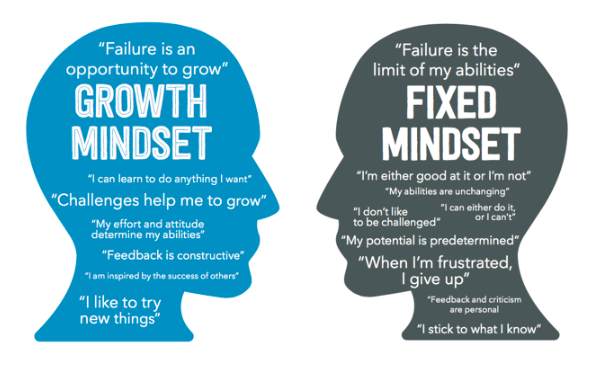
Mindset Intervention focuses on changing an individual’s core beliefs, attitudes, and thought patterns, especially from a Fixed Mindset to a Growth Mindset or other positive mindsets.
The goal is to challenge and change Limiting Beliefs that can hinder personal development and replace them with Empowering Beliefs that promote resilience, self-improvement and a positive outlook.
The Relationship between Observer Change and Mindset Intervention
Observer Change is a technique that improves self-awareness, allowing people to observe their thoughts and emotions without judgment. This self-awareness is a key aspect of a Mindset Intervention.
Self-awareness gained through Observer Change can reveal Limiting Beliefs and thought patterns that contribute to a Fixed Mindset. This self-awareness is the first step in addressing and changing mindset.
The Observer Change allows individuals to identify and recognize their Limiting Beliefs, which are often deeply rooted in their thought processes and behavior.
When individuals observe their thought patterns and emotional reactions from an objective point of view, they can become aware of counterproductive beliefs that need to be addressed in a Mindset Intervention.
As explained above, the goal of a Mindset Intervention is to help the person adopt a Growth Mindset rather than a Fixed Mindset. This is clearly associated with the idea of Observer Change.
A Mindset Intervention is never just First Order Learning. It is not just about changing the Actions, it is always about changing the Observer.
Therefore, the consequences of a successful Mindset Intervention will always be Second Order Learning or Transformational Learning.
The Process of an Effective Mindset Intervention
Once Limiting Beliefs are identified through Observer Change, the next step is to challenge and reframe these beliefs. This is where Mindset Intervention comes into play.
Coaches, therapists or mentors work with people to question the validity of their Limiting Beliefs and guide them towards adopting more empowering beliefs consistent with a Growth Mindset.
The goal is to replace the Fixed Mindset with a Growth Mindset. The Observer Change helps people understand how their Fixed Mindset works by shedding light on their thought processes.
Mindset Intervention builds on this understanding to facilitate the transformation from a Fixed Mindset to a Growth Mindset. Clients learn to replace self-limiting beliefs with empowering beliefs that support their personal and professional development.
Shifting to a Growth Mindset through a Mindset Intervention and Observer Change can lead to changes in behavior, decision making, and problem solving.
People are more likely to take on challenges, push themselves, and face setbacks with resilience when they view their abilities and potential through a growth-oriented lens.
Both concepts require continuous practice and self-reflection. Observer Change and Mindset Intervention are not isolated events; They involve continuous self-improvement and maintaining a positive mindset.
Mindset Intervention in the Context of Coaching
Generally, in the context of a coaching session, the coach attempts to identify whether the client has a particular Limiting Belief. The coach then asks challenging questions that can trigger an Observer Change. As a consequence, the client may be able to abandon their particular Limiting Belief and adopt a more positive Empowering Belief in its place.
If the coach understands and adopts Mindset Theory, she can attempt to identify the client’s mindset rather than looking for a specific belief. So, instead of simply trying to challenge this particular belief, the coach can adopt the practice of Mindset Intervention. As a consequence, the client can move from a Fixed Mindset to a Growth Mindset.
Limiting Beliefs will likely never appear in isolation. A person who has a particular Limiting Belief probably also has several other similar Limiting Beliefs. Changing a specific belief will not be enough for this person to reach their full potential.
Therefore, the idea of Mindset Intervention is probably more effective than simply challenging a specific belief. If the coach is able to help their client leave a Fixed Mindset and adopt a Growth Mindset, the positive consequences will have a greater impact on the client’s well-being and will probably also last longer over time.
The concepts of Limiting and Empowering Beliefs in coaching are closely related to Mindset Theory, as they are integral components of an individual’s mindset, which is the underlying set of beliefs and attitudes that shape their thoughts, behaviors and actions. Below we will explore how these concepts intersect and interact within the framework of Mindset Theory.
Mindset Theory, developed by Carol Dweck, posits the existence of two main mindsets: the Fixed Mindset and the Growth Mindset. These mindsets are based on beliefs about the malleability of one’s abilities and intelligence.
A Fixed Mindset believes that skills are static and unchangeable, while a Growth Mindset believes that skills can be developed through effort and learning.
Limiting Beliefs are associated with a Fixed Mindset. When an individual has Limiting Beliefs, he tends to believe that his abilities are fixed and this belief limits his potential for growth and development.
These beliefs often manifest as self-doubt, fear of failure, and avoidance of challenges, which can hinder personal and professional progress.
Empowering Beliefs align with the principles of a Growth Mindset. People with Empowering Beliefs have the confidence that they can improve and grow, and this encourages a more positive and proactive approach to life’s challenges.
Empowering Beliefs encourage people to accept challenges, persist in the face of setbacks, and view effort as a path to mastery and achievement.
Relationships between Beliefs and Mindsets
Limiting Beliefs are essentially a manifestation of a Fixed Mindset. When someone believes they lack the ability to change or develop, they are operating with a Fixed Mindset. This perspective aligns with the basic principles of Mindset Theory.
Empowering Beliefs, on the other hand, reflect the basic principles of a Growth Mindset. A person with Empowering Beliefs perceives their abilities as flexible and open to improvement, which corresponds directly to the point of view of the Growth Mindset.
We can observe that in most pairs of Mindsets there is a clear correspondence with a specific set of beliefs.
Fixed Mindset: The person who has a Fixed Mindset also has mostly Limiting Beliefs.
Growth Mindset: The individual who has a Growth Mindset also has mostly Empowering Beliefs.
Other types of mindsets that are clearly associated with Limiting Beliefs are the Pessimistic Mindset and the Scarcity Mindset.
In addition, other types of mindsets that can be related to Empowering Beliefs are the Optimistic Mindset, the Abundance Mindset and the Expert Mindset.
Beliefs and Mindsets in the context of Coaching
In the context of coaching and personal development, Mindset Theory provides a framework for understanding the beliefs underlying an individual’s mindset. Coaches use this understanding to identify and address Limiting Beliefs and encourage the adoption of Empowering Beliefs. This is how they relate in coaching:
Identify and Challenge Limiting Beliefs: Coaches help clients recognize their Limiting Beliefs, often linked to a Fixed Mindset, and challenge these beliefs. This involves asking questions, examining evidence, and fostering self-awareness to reveal the irrational nature of these beliefs.
Cultivating Empowering Beliefs: Coaches work with clients to develop Empowering Beliefs that are consistent with a Growth Mindset. They encourage people to see challenges as opportunities for growth, accept the importance of effort, and cultivate a sense of resilience and self-empowerment.
Mindset Shift: The coaching process often includes a fundamental mindset shift from a Fixed Mindset (characterized by Limiting Beliefs) to a Growth Mindset (driven by Empowering Beliefs). This change is integral to the client’s personal and professional development.
Goal Achievement: With a Growth Mindset and Empowering Beliefs, clients are better equipped to set and achieve their goals. They are more willing to take on challenges, persist in the face of setbacks, and see effort as a means to achieving mastery.
In summary, Limiting and Empowering Beliefs in coaching are directly related to Mindset Theory, as they reflect the Fixed and Growth mindsets, respectively.
Coaching involves helping people recognize and challenge Limiting Beliefs while encouraging the development of Empowering Beliefs, which ultimately facilitates a shift from a Fixed to a Growth Mindset, which can have a profound impact on personal growth and achievements.
The concept of Mindset Intervention refers to deliberate efforts and strategies aimed at helping people change their mindset from a Fixed to a Growth Mindset, or to develop other positive and constructive mindsets.
These Mindset Interventions are often used in educational, training and therapeutic settings to promote personal growth, learning and resilience. The goal is to change an individual’s beliefs and attitudes about their abilities and potential, ultimately leading to more positive behaviors and outcomes.
The Process of Mindset Interventions
Mindset Interventions are designed to change an individual’s beliefs and attitudes to promote more positive and constructive mindsets. When training someone to adopt a Growth Mindset, we must help them learn how they see themselves and others. Only then can they begin to make the changes necessary to spend more time in the growth zone.
Evaluation and Diagnosis
The first step in a Mindset Intervention is usually to assess the individual’s current mindset. This can be done through self-report questionnaires, interviews, or observation.
The assessment helps identify whether the individual has a Fixed Mindset, a Growth Mindset, or any other specific mindset that requires intervention.
Educational and Informational Approach
A common approach to mindset intervention involves providing people with information and education about the concept of Mindset. They learn about the differences between Fixed and Growth Mindsets and how these mindsets impact their lives.
The Mindset Intervention can include case studies, examples, and research results that clearly demonstrate the benefits of adopting a Growth Mindset.
Self-reflection and Consciousness
Mindset Interventions often encourage people to engage in self-reflection to become aware of their existing beliefs and attitudes. This may involve journaling, discussing personal experiences, and identifying instances of fixed thinking.
Self-awareness is a fundamental step as it lays the necessary foundations for a change in mentality.
Challenging and Restructuring Beliefs
Mindset Interventions challenge and restructure negative or limiting beliefs. Coaches, educators or therapists work with their clients to identify and challenge these beliefs, helping them see the flaws and limitations in their thinking.
For example, cognitive restructuring techniques, such as Cognitive Behavioral Therapy (CBT), are often used to replace fixed beliefs with growth-oriented ones.
Establishment of Objectives and Action Plans
It is essential to set specific, achievable goals and create action plans that align with a Growth Mindset. People are encouraged to break down their goals into manageable steps and track their progress.
Goal setting helps people apply their Growth Mindset to real-life situations.
Comments and Encouragement
Providing continuous feedback and encouragement is crucial in Mindset Intervention. Coaches and mentors play a supportive role in helping people stay on track and reinforcing their efforts.
Constructive feedback helps people make adjustments and continue developing a Growth Mindset.
Practice and Reinforcement
Constant practice and reinforcement are essential to solidify the mindset shift. People need to repeatedly challenge fixed beliefs, use positive self-talk, and apply a Growth Mindset in various life situations.
Progress Measurement
The effectiveness of a Mindset Intervention is evaluated by measuring changes in an individual’s beliefs, behaviors, and outcomes. This may involve self-assessment, behavioral observations, and indicators of academic or professional performance.
Sustainability and Maintenance
Mindset intervention is not a one-time event but an ongoing process. Sustainable change requires ongoing effort, reinforcement, and support to maintain a long-term growth mindset.
Techniques for Mindset Interventions
Below we present five concrete examples of Mindset Intervention techniques and approaches. Each of these concrete mindset interventions is designed to address specific aspects of an individual’s mindset and support the shift toward a more positive, growth-oriented perspective.
These techniques can be applied in various settings, including education, coaching, therapy, and personal development, to encourage lasting changes in mindset and improve overall well-being and success.
1) Workshops on Growth Mindset
Conduct workshops or training sessions that educate people about the concept of Growth Mindset. These sessions provide information on the differences between Fixed and Growth Mindsets and how they impact personal and professional development.
Clients participate in self-reflection, group discussions, and exercises that challenge fixed beliefs and encourage the adoption of a Growth Mindset. They can also create action plans to apply the principles of the Growth Mindset in their lives.
2) Cognitive Restructuring and Cognitive Behavioral Therapy (CBT)
Cognitive restructuring techniques, such as those used in CBT, can be applied to change negative or fixed beliefs. Therapists or coaches work with people to identify and reframe self-limiting thoughts.
For example, if someone believes they are inherently bad at public speaking (Fixed Mindset), a Mindset Intervention through CBT might involve challenging that belief with evidence of successful speeches they have given in the past and creating more balanced growth. .
3) Positive Affirmations and Internal Dialogue
Encouraging people to practice positive affirmations and self-talk is a simple Mindset Intervention. Clients receive a list of affirmative statements that support a Growth Mindset.
Clients incorporate these affirmations into their daily routines to replace fixed or negative thoughts. For example, someone struggling with self-doubt might use a statement like, “I am capable of learning and improving in any area.”
Encouraging positive affirmations and self-talk is a key aspect of Mindset Intervention. People practice affirming statements that promote a Growth Mindset and counteract self-limiting thoughts. In this case, someone could replace “I can’t do this” with “I can learn to do this with effort and practice.”
4) Mentoring and Role Models
Mentoring relationships and exposure to role models who exemplify a Growth Mindset can be very influential interventions.
People benefit from interacting with mentors or role models who demonstrate resilience, a willingness to learn, and a commitment to self-improvement and professional growth.
Interactions with mentors or role models can inspire and reinforce the desired mindset shift. Seeing others overcome challenges and persist in the face of setbacks can be motivating.
5) Establishment of Objectives and Action Plans
Setting specific, measurable, attainable, relevant, time-bound (SMART) goals that align with a Growth Mindset is a practical intervention.
Individuals work with coaches or educators to establish goals related to their personal or professional development. They create detailed action plans and monitor their progress, applying Growth Mindset principles to overcome obstacles and challenges.
Conclusions
Mindset Intervention can have a profound impact on an individual’s personal and professional development. By helping people move from a Fixed Mindset to a Growth Mindset or encouraging other positive mindsets, these interventions empower people to accept challenges, learn from failures, and reach their full potential.
There are several interventions we can apply to help someone use their abilities to learn, develop a Growth Mindset and challenge a Fixed Mindset.







 Effective Software Design